
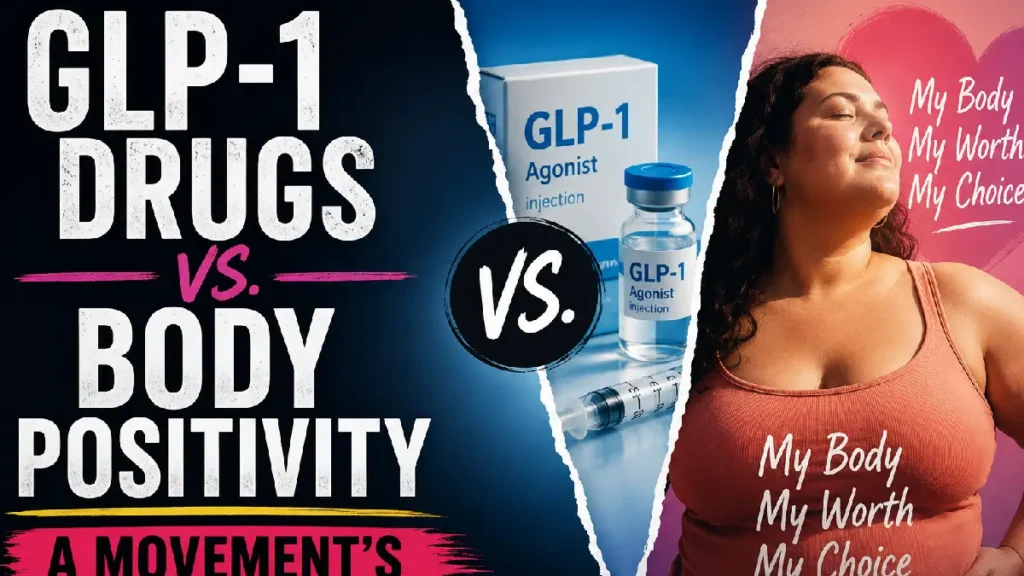
A quiet revolution is sweeping through the world, not of politics or technology, but of our very bodies. Suddenly, a new class of drugs, the GLP-1 agonists like Ozempic and Wegovy, has offered a powerful new path to weight loss for millions. This medical breakthrough, hailed by many as life-changing, has unexpectedly ignited a fiery debate, colliding head-on with one of the most influential social movements of our time: body positivity.
For years, the body positivity movement has championed radical self-acceptance, challenging unrealistic beauty standards and advocating for health at every size. Its message resonated deeply, empowering countless individuals to embrace their bodies without shame. But now, with a medically sanctioned path to weight loss readily available, many are asking: What does this mean for the movement? Is its core message being undermined, or is it simply evolving?
The tension is palpable, creating a complex emotional landscape where personal choices, medical advancements, and deeply held beliefs about self-worth are all at play. It’s a challenging time for advocates and individuals alike, forcing a re-evaluation of what it truly means to be positive about one’s body.
🔥 Quick Facts
- GLP-1 drugs (like Ozempic, Wegovy) are rapidly gaining popularity for significant weight loss.
- The body positivity movement promotes self-acceptance and challenges weight stigma.
- The rise of these drugs creates a direct conflict with the movement’s anti-diet, anti-weight loss messaging.
- Many question the body positivity movement’s credibility when medical weight loss is so accessible.
- This debate sparks emotional reactions about personal health choices and societal pressure.
- The discussion forces a re-evaluation of ‘health at every size’ in the context of new medical interventions.
The Unforeseen Collision: GLP-1 Drugs Reshape the Narrative
Imagine a world where significant, sustainable weight loss is not just a dream but a reality for many, achieved through a weekly injection. That’s the promise of GLP-1 drugs. Originally developed for type 2 diabetes, their powerful weight-loss side effects quickly made them a game-changer. Suddenly, individuals who had struggled for years with diet and exercise found an effective solution, leading to dramatic results and improved health markers.
This medical marvel has been celebrated by many, including doctors and patients who see it as a crucial tool in addressing obesity and its related health issues. The narratives around weight loss began to shift, moving from personal failing to medical treatment. This shift, however, created an unexpected ripple effect, crashing into the established shores of the body positivity movement.
Body Positivity’s Core Message Under Scrutiny
For decades, the body positivity movement has fought tirelessly against the relentless pressure to be thin. It encouraged self-love, challenged fatphobia, and advocated for diverse body shapes and sizes. Its foundational message was clear: your worth is not tied to your weight, and all bodies are good bodies. This message empowered millions to break free from the cycle of dieting and self-criticism.
But how does this message stand when a highly effective medical intervention for weight loss becomes widely available? If societal norms begin to normalize using drugs to achieve a certain body type, does it undermine the very essence of accepting one’s body as it is? Many within the movement and observing it are grappling with this profound question. The availability of GLP-1 drugs seems to challenge the premise that weight is simply a neutral descriptor, bringing medical intervention into a space previously dominated by self-acceptance and social justice.
A Deep Dive into the Debate: Credibility and Inclusivity
The debate around body positivity and GLP-1 drugs is complex and emotionally charged. On one side, some body positivity advocates feel that the rapid embrace of these medications could set back years of progress. They worry it reinforces the idea that larger bodies are inherently problematic and need to be ‘fixed.’ There’s a concern that it might reignite diet culture, albeit in a medicalized form, and invalidate the struggles of those who have worked hard to accept their natural body size.
On the other hand, proponents of GLP-1 drugs argue that these are legitimate medical treatments for a complex disease. They emphasize the health benefits, from improved cardiovascular markers to better blood sugar control. For many, these drugs offer relief from chronic conditions and a chance at a healthier life, which they see as a personal choice, not a betrayal of any movement. They question if body positivity should exclude medical advancements that can genuinely improve well-being.
The public reaction is equally varied. Some express relief and joy over their newfound ability to manage their weight, while others feel a sense of confusion or even guilt, having spent years trying to internalize body positive messages, only to now consider a medical intervention. Social media, of course, amplifies these diverse and often conflicting voices, making it difficult to find a nuanced middle ground.
The Shifting Landscape of Self-Perception and Health
The widespread use of GLP-1 drugs is undeniably changing how society views weight and health. Where once discussions focused on diet and exercise, now the conversation includes pharmaceutical interventions. This shift can create new pressures, both subtle and overt. Are we moving towards a new societal expectation where weight loss, through any means, becomes the preferred norm?
This raises critical questions about the definition of health. Is health purely a medical state, or does it encompass mental well-being, self-acceptance, and freedom from societal judgment? The body positivity movement sought to broaden this definition, but the advent of effective medical weight loss tools forces us to reconsider these boundaries. The intersection of personal autonomy, medical ethics, and social messaging has never been more intricate.
Understanding the Divide: Body Positivity vs. GLP-1 Era
The following table outlines the key areas of contention and the differing perspectives emerging from this significant societal shift.
| Aspect | Body Positivity Stance (Pre-GLP-1 Boom) | GLP-1 Drug Era Impact (New Questions) |
|---|---|---|
| Core Message | Radical self-acceptance, anti-diet culture, all bodies are good bodies. | Is self-acceptance still the primary goal when medical weight loss is an option? |
| View on Weight | Weight is neutral, ‘health at every size’ (HAES) principles. | Weight loss is a medical goal, viewed as a health improvement for many. |
| Empowerment | Self-love, challenging beauty standards, rejecting societal pressure. | Empowerment through medical choice, agency to change one’s body. |
| Credibility Question | Movement built on challenging weight loss as a primary goal. | The availability of effective weight loss drugs questions the movement’s stance. |
| Societal Pressure | Aim to reduce pressure to be thin and embrace diversity. | Could create new pressure to seek medical solutions for weight loss. |
| Inclusivity | Embracing all body types and sizes. | How does the movement include those who choose medical weight loss without judgment? |
Emotional Ripples: Public Reactions and Personal Choices
The personal stories emerging from this clash are deeply emotional. Many individuals who have spent years internalizing body positivity messages, learning to love their bodies regardless of size, now find themselves at a crossroads. Some feel a sense of liberation with GLP-1 drugs, finally finding a solution to a lifelong struggle. Others feel conflicted, wondering if their choice to pursue weight loss via medication is a betrayal of the very principles they’ve come to embrace.
Celebrities and influencers, often at the forefront of body image discussions, are also navigating this complex terrain. Their choices, whether to use or not use these drugs, are scrutinized, adding another layer to the public discourse. The emotional toll on individuals, caught between societal expectations, personal desires, and powerful social movements, cannot be overstated.
The Future of Body Positivity: Adaptation or Redefinition?
So, where does the body positivity movement go from here? Does it adapt to include medical interventions as valid personal health choices, or does it double down on its original message, potentially alienating those who find success and health through GLP-1 drugs? The answer likely lies in evolution.
Perhaps the movement will shift its focus, emphasizing health equity, access to care (including medical weight loss for those who need it), and a non-judgmental approach to individual body journeys. The core tenets of self-acceptance and fighting weight stigma remain crucial, but their application in a world with new medical possibilities requires thoughtful re-evaluation. The conversation is ongoing, and its outcome will shape how we perceive our bodies and health for generations to come.
FAQs: Navigating the Body Positivity and GLP-1 Drug Debate
GLP-1 drugs are medications like Ozempic and Wegovy that have proven highly effective for weight loss. They’re causing a stir because their success in medical weight loss challenges the core message of the body positivity movement, which advocates for self-acceptance at any size and critiques diet culture.
There isn’t a single, unified stance. Some body positivity advocates express concern that these drugs reinforce fatphobia and unrealistic body ideals, potentially undermining years of work. Others acknowledge individual autonomy and the medical benefits for some, advocating for a more nuanced approach.
The boom raises questions about the body positivity movement’s credibility for some, particularly if they interpret the movement as being anti-weight loss in all contexts. When an effective medical solution for weight management emerges, it forces a re-evaluation of how the movement addresses health and personal choice.
Absolutely. Many believe that body positivity is about self-acceptance and autonomy. If someone chooses to use GLP-1 drugs for their health and well-being, it can be seen as an act of self-care. The movement is increasingly challenged to be inclusive of all health journeys.
The main conflict lies in the tension between the body positivity movement’s emphasis on accepting one’s body as it is and the medical world’s provision of highly effective tools for changing one’s body. It’s a clash between radical acceptance and medical intervention, both aiming for well-being but through different paths.
The movement may evolve to focus more on health equity, access to care, and supporting individual health journeys without judgment, whether that involves medical weight loss or not. It could emphasize fighting weight stigma regardless of how someone manages their weight, rather than being strictly anti-weight loss.
Final Thoughts
The unexpected collision between the GLP-1 drug boom and the body positivity movement is more than just a debate about weight; it’s a profound examination of health, self-worth, and societal expectations. It challenges us to think more deeply about what it means to care for our bodies, both physically and emotionally. As these conversations continue, fostering empathy, open dialogue, and a nuanced understanding of individual choices will be paramount. The future of how we define body acceptance and health is being written right now, in the midst of this fascinating and often emotional discussion.
SOURCES:
- Art Threat: Body positivity advocates clash with GLP-1 drug boom, questioning movement’s credibility
{“@context”:”https://schema.org”,”@type”:”FAQPage”,”mainEntity”:[{“@type”:”Question”,”name”:”The Future of Body Positivity: Adaptation or Redefinition?”,”acceptedAnswer”:{“@type”:”Answer”,”text”:”So, where does the body positivity movement go from here? Does it adapt to include medical interventions as valid personal health choices, or does it double down on its original message, potentially alienating those who find success and health through GLP-1 drugs? The answer likely lies in evolution.”}}]}